
Aptofit Track Pro
All-in-one health tracking (heart rate, SpO₂, sleep, activity).
Non-invasive glucose trend monitoring — extremely convenient for trend awareness.
Long battery life compared with many full-color smartwatches.
Large, easy-to-read display and comfortable daily wear.
Typically more affordable than top-tier brand smartwatches that offer partial medical features.
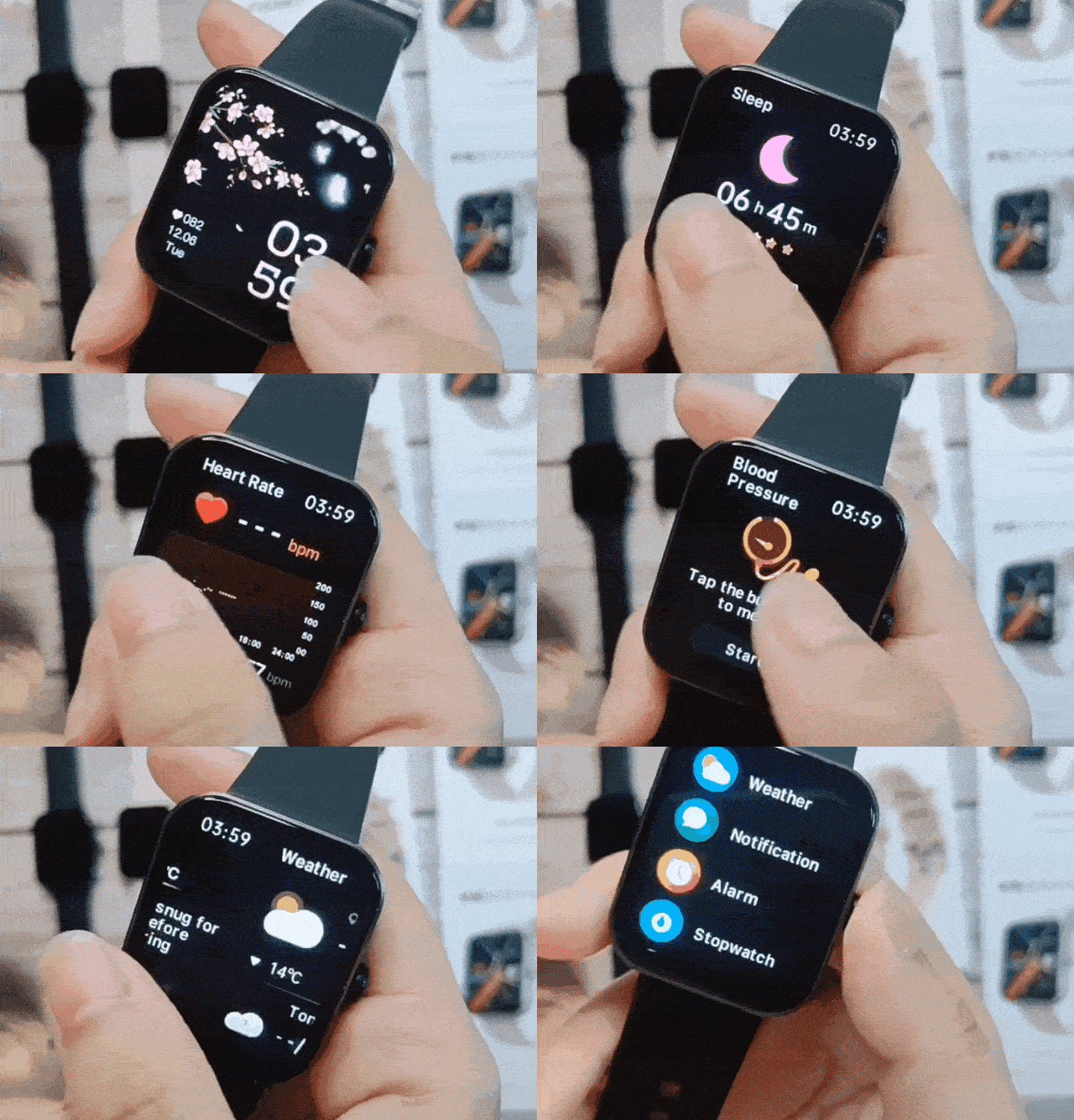
The Aptofit Track Pro is one of the newer entrants in the crowded smartwatch and health-tracker market. It markets itself as an all-in-one health companion: a full-featured fitness tracker with an emphasis on continuous health monitoring — including claims of non-invasive, wrist-based glucose estimation — plus long battery life, a large display, and smartphone connectivity. In this article I’ll walk through what the Track Pro is, how it works, its key features, the pros and cons, practical use cases, buying advice, and tips for getting the most from the device. I’ll also point out where you should be cautious and what to verify if you plan to rely on it for medical care.
What is Aptofit Track Pro Smart Watch?
At its core, the Aptofit Track Pro is a consumer smartwatch designed around health monitoring. It combines a brightly lit touchscreen, a suite of optical and motion sensors, and a companion smartphone app to deliver continuous tracking of activity, heart rate, sleep, blood oxygen, skin temperature and — most notably — a non-invasive glucose estimate from the wrist. The vendor positions it as convenient alternative to carrying multiple devices: a fitness band, a glucose monitor, and a notification device all rolled into one. Several product pages and reviews describe the same set of features and suggested battery performance.
Design and hardware: build, screen and comfort
The Track Pro follows the modern square/rounded display style rather than the circular look of some sport watches. It generally features:
A 1.7–1.9-inch full-color HD touchscreen (large, readable watch face options).
Lightweight aluminum alloy or metal-finish housing for a premium feel.
Interchangeable silicone or metal bands in multiple colors.
A side button or digital crown for navigation plus touch gestures.
Magnetic charging cable or pogo-pin charger included in the box.
The hardware is built to be comfortable for all-day wear — crucial for continuous health monitoring — and several listings claim IP67 or IPX68 water/dust resistance, so it’s splash resistant and safe for everyday wear (though full submersion performance can vary; check the exact IP rating on the unit you buy). The design is unambitious but functional: readable screen, relatively slim body, and straps that fit most wrists.
Key features (what it can do)
Below are the primary functions that define the Aptofit Track Pro’s value proposition:
Non-invasive glucose estimation — The headline feature: an optical sensor system claims to estimate blood glucose trends without finger pricks. This is done via advanced optical sensing (similar in concept to photoplethysmography adaptations) and on-device algorithms that convert sensor signals into estimated glucose readings. Multiple vendor pages and reviews highlight this capability as the product’s major selling point.
24/7 heart rate monitoring — Continuous heart rate tracking with alerts for unusually high or low rates.
Blood oxygen (SpO₂) monitoring — Spot checks and trend tracking for oxygen saturation.
Blood pressure estimation — A wrist-based blood pressure estimate function (note: most consumer wrist BP estimators are approximations rather than clinical sphygmomanometer readings).
Sleep tracking and sleep stage analysis — Tracks sleep duration, light/deep sleep and awake periods plus a sleep score or insights.
Activity and sport modes — Step counting, calorie estimation, multiple sports modes (running, cycling, walking, yoga, etc.), and basic GPS-assisted activity summaries when paired with a phone.
ECG/arrhythmia screening (software dependent) — Some firmware versions advertise basic ECG capture to check rhythm; accuracy and regulatory status vary.
Smartphone connectivity and notifications — Displays calls, SMS and app alerts; some versions support Bluetooth calling or quick replies.
Long battery life — Manufacturer and third-party writeups report multi-day stamina — typically marketed as up to 10–15 days under light use and shorter in GPS/continuous mode.
Companion app (iOS & Android) — Syncs data to a phone app where you can view trends, configure alerts, and export basic logs.
How the non-invasive glucose monitoring works (and the caveats)
Most descriptions explain the glucose feature as optical, using light-based sensors to read changes in blood/tissue characteristics and then running that raw data through machine learning models to estimate glucose values. Conceptually this is related to photoplethysmography (PPG), which detects blood volume changes using light.
Important caveats:
It’s an estimate, not a medical diagnostic replacement. Non-invasive glucose technology is evolving rapidly but — as of current mainstream regulatory practice — wrist-based optical glucose estimations are not universally accepted as medical-grade replacements for finger-prick or continuous glucose monitor (CGM) systems. If you are diabetic or insulin dependent, do not switch dosing decisions to a consumer wristwatch without confirming accuracy against a clinically validated glucose measurement and consulting your healthcare provider. Several reviews praise convenience but also urge caution about medical accuracy.
Calibration and individual variation. Optical estimates can be influenced by skin tone, wrist anatomy, ambient light, motion and hydration; many devices provide a trend report rather than exact lab-grade numbers.
Best as a trend tool. For most users the feature is most useful for trend spotting (e.g., “my glucose tends to rise after that snack”) rather than replacing diagnostic tests.
Performance: battery life, sensors and accuracy
The Track Pro’s selling points include a long battery life (multiple days to two weeks in light use) and a sensor suite that performs continuous tracking without frequent charging. Independent early reviews and aggregated writeups claim battery life in the ~10–15 day range on the promotional page and user reports, while active GPS or continuous measurement modes reduce that substantially. As always, real-world battery life depends on screen brightness, notification load, sensor sampling frequency, and how often you use advanced modes.
Sensor accuracy for heart rate and activity tracking is generally in line with other consumer trackers — good for daily fitness and trend monitoring but not equivalent to clinical devices. The glucose and blood pressure estimates are highlighted frequently in marketing materials and user testimonials; however independent clinical validation studies are rare in public materials, so treat absolute numbers with healthy skepticism.
User experience: app, interface and everyday use
Setup. Charge the watch, install the companion app on iOS or Android, pair via Bluetooth, and follow the guided steps. App sync brings historical trends to your phone and lets you change watch faces, configure alerts, and export data.
Interface. The large touchscreen plus one physical button makes navigation simple. Watch faces commonly show step count, heart rate, battery and a main time widget.
Notifications. Incoming calls, texts and app notifications appear on the watch; some models support Bluetooth calling and will show caller ID or let you dismiss calls.
Alerts and automation. You can configure alerts for high/low heart rate, inactivity reminders, and sleep goals. The glucose feature may provide trend alerts (rapid rise/fall), again depending on firmware and app.
From user reviews: people enjoy the convenience of consolidated metrics, and many note the comfort of wearing it 24/7 thanks to battery life and strap design. However, some users reported occasional sync hiccups or delayed push notifications depending on smartphone OS and permissions.
Pros and cons — a balanced look
Pros
All-in-one health tracking (heart rate, SpO₂, sleep, activity).
Non-invasive glucose trend monitoring — extremely convenient for trend awareness.
Long battery life compared with many full-color smartwatches.
Large, easy-to-read display and comfortable daily wear.
Typically more affordable than top-tier brand smartwatches that offer partial medical features.
Cons / cautions
Glucose and blood pressure readings are estimates and not replacements for medical devices; verify before making clinical decisions.
Limited independent, peer-reviewed validation published publicly (as of the sources checked).
Firmware and app quality vary; some users report software updates needed to improve stability.
Availability and warranty/support depend on the seller — confirm return policy and seller reputation before purchasing.
Who should consider buying an Aptofit Track Pro?
Curious health trackers who want consolidated metrics and like the convenience of seeing glucose trends without finger pricks (while understanding the feature is not a medical replacement).
Fitness enthusiasts who want a large display and long battery life for multi-day tracking without frequent charging.
People who want a multi-sensor watch on a budget — it’s usually priced lower than flagship smartwatches offering limited medical-adjacent sensors.
Not recommended for insulin-dependent diabetics who plan to rely solely on the watch for dosing decisions. Always use clinically validated glucose measurement for therapeutic changes.
Practical tips and best practices
Use the watch as a trends tool. Treat reported glucose readings as directional signals (up/down, trending) rather than single-point diagnoses.
Confirm suspicious readings. Any high/low alert that could indicate a medical emergency should be checked immediately with a validated device or professional.
Keep firmware and app updated. Manufacturers often release fixes for sensor processing and stability.
Wear correctly. Optical sensors need skin contact; wear the watch snugly and follow vendor instructions for placement.
Charge smartly. Use the included charger and avoid over-exposing the watch to extreme heat or cold.
Check compatibility and permissions. Ensure the app has necessary permissions on your phone for accurate notifications and background sync.
Buying advice: what to verify before purchase
Seller legitimacy and return policy. Buy from reputable sellers or the official store. Check warranty and return windows; health devices can be sensitive to exchange needs.
Regulatory claims. If the seller presents the device as “medical grade” or FDA-cleared for glucose monitoring, ask for explicit documentation or approval numbers.
Accessory and spare band availability. Bands, chargers and replacement parts matter for long-term use.
App reviews. Read app store reviews for the companion app to learn about stability on your phone OS.
Final verdict — practical summary
The Aptofit Track Pro is an ambitious product that packages a broad set of health-tracking features — heart rate, SpO₂, sleep, activity and an appealing non-invasive glucose estimation — into an affordable, attractive smartwatch. For general wellness monitoring, fitness trends, and convenience, it offers strong value: a bright display, comfortable design and long battery life make it an attractive daily wearable.
However, the single most important caution is this: do not treat the non-invasive glucose estimate as a medical replacement for clinically validated glucose meters or professional medical advice. Use the Track Pro to spot trends and to help inform lifestyle choices, but verify any clinical decisions with proven medical devices and your healthcare team. Several independent writeups and reviewers make the same point while praising the convenience of the watch.
Quick reference: specifications (typical listings)
Display: ~1.7–1.9″ full-color touchscreen.
Sensors: optical heart rate, SpO₂, skin temperature, PPG/optical glucose sensor, accelerometer, possible ECG support.
Battery: advertised 7–15 days (light use); 1–2 days in continuous GPS or heavy sensor modes.
Water resistance: IP67 / IPX68 (varies by SKU).
Connectivity: Bluetooth to iOS & Android companion app.
Extras: Notifications, alarms, multiple watch faces, sports modes, companion app analytics.
Final tip
If you want the convenience of trend glucose monitoring and broad wellness tracking in one device, the Aptofit Track Pro is worth exploring — but pair the device with critical thinking: use it for lifestyle insights, not clinical decisions. If precise medical monitoring is essential for you, ask about clinical validation data, compare to medically cleared CGMs or glucose meters, and consult a healthcare provider.